
When Vermont Officers Impound at the Roadside
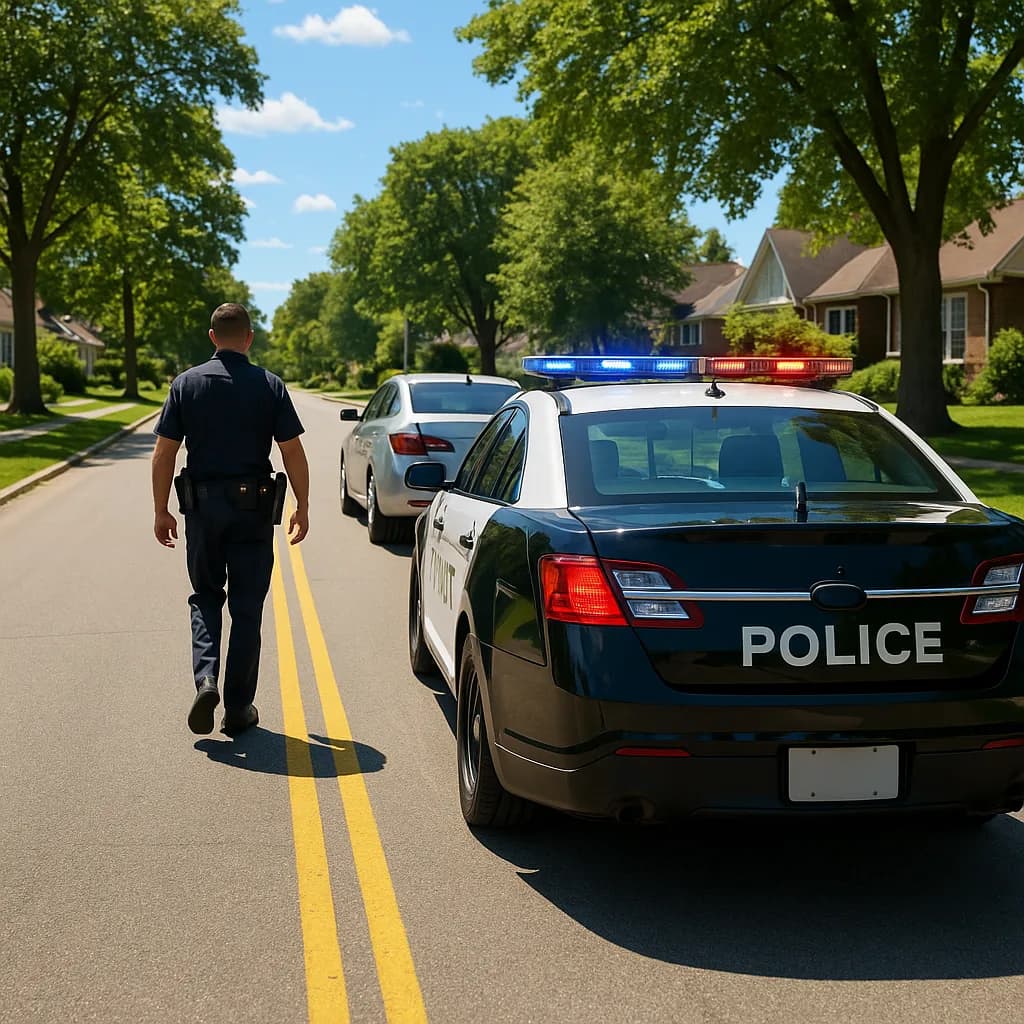
You're at a traffic stop in Vermont and the officer asks for proof of insurance. You don't have your card, or you let your policy lapse, or you're driving a newly-purchased vehicle you haven't added to your policy yet. The officer has the authority to impound your car immediately if you cannot produce acceptable proof of coverage on the spot. Vermont statute requires every driver to carry proof of financial responsibility, and driving without it gives law enforcement discretion to remove the vehicle from the road.
The impound decision is not automatic. Officers evaluate whether you can produce proof within a short grace window, whether the vehicle is registered to you, and whether impounding the car is necessary to prevent continued uninsured operation. If you can call your insurer or access a digital insurance card within minutes, many officers will allow that verification before deciding. If you cannot, or if the stop reveals a lapsed policy or an uninsured vehicle, the car goes to impound and you face a citation, a license suspension process initiated by the Commissioner of Motor Vehicles, and the cost of retrieval.
Compare car insurance rates in your state
Get quotes from licensed carriers — no obligation, no spam, results in minutes.
Get Your Free QuoteVermont Uninsured Motorist Rate
11.8%
More than one in ten Vermont drivers operates without insurance, creating substantial financial risk for insured motorists who share the road. Vermont mandates uninsured motorist coverage on every policy to protect against this exposure.
Insurance Information Institute, 2023
What Counts as Acceptable Proof in Vermont
Vermont accepts three forms of proof at a traffic stop: a physical insurance card issued by your carrier, a digital insurance card displayed on your phone, or a printed declaration page showing current coverage. The card or document must show your name, the vehicle identification number or license plate, the policy number, the coverage period, and the carrier's name. An expired card does not count, even if your policy renewed and you simply haven't received the new card yet.
If you're driving a vehicle you just bought, you have a grace period during which your existing policy's coverage extends to the new car. Most Vermont carriers provide 14 to 30 days of automatic coverage for a newly-acquired vehicle, but that grace period only applies if you already carry a policy on another car and you notify the carrier within the specified window. If you don't have an existing policy, or if you're past the notification deadline, the new car is uninsured and the officer can impound it.
Digital proof is legally equivalent to a physical card in Vermont, but the officer must be able to view it. If your phone is dead, locked, or you cannot access the app or email containing your card, you cannot produce proof and the impound authority applies. Telling the officer you have insurance is not proof. The statute requires documentation, and without it the vehicle is treated as uninsured at the roadside.
Vermont officers impound uninsured vehicles to prevent continued operation without coverage. Once impounded, you cannot retrieve the car until you provide proof of current insurance and pay all towing and storage fees.
The Roadside Decision and Immediate Consequences

If the officer determines you cannot produce acceptable proof, the vehicle is towed to an impound lot contracted by the local jurisdiction or the Vermont State Police. You receive a citation for operating without insurance, and the Commissioner of Motor Vehicles receives notice of the violation. The suspension is separate from any court penalty you face for the citation itself.
The impound lot charges a towing fee and a daily storage fee that accrues from the moment the vehicle arrives. Vermont does not cap impound storage fees by statute, so the daily rate varies by facility. You cannot retrieve the car until you provide proof of current insurance to the lot, pay all accumulated fees, and show that your license suspension has been lifted or that you're legally permitted to have someone else retrieve the vehicle on your behalf. If you cannot afford the fees or cannot obtain insurance quickly, the storage charges compound daily, and after a statutory holding period the lot can initiate a lien sale to recover costs.
Related Articles




How to Retrieve Your Vehicle After Impound
Retrieval requires three steps completed in sequence. First, obtain a new insurance policy or reinstate your lapsed policy. The policy must meet Vermont's minimum liability limits: $25,000 per person for bodily injury, $50,000 per accident for bodily injury, and $10,000 for property damage. Vermont also mandates uninsured motorist coverage and personal injury protection, so your policy must include those coverages to satisfy state requirements. Once the policy is active, request an SR-22 certificate from your carrier.
Vermont requires SR-22 filing for three years after a conviction for driving without insurance. The SR-22 is not a type of insurance; it is a certificate your carrier files electronically with the Vermont DMV to prove you carry continuous coverage. The DMV processes reinstatements within one to three business days after receiving payment and the SR-22.
After your license is reinstated, take your proof of insurance and your driver's license to the impound lot. Pay the towing and storage fees in full. The lot releases the vehicle only when all fees are paid and you provide documentation showing you're legally permitted to drive. If your license is still suspended, you must arrange for a licensed driver to retrieve the car on your behalf, and that driver must provide their own proof of insurance if they plan to drive the vehicle off the lot.
If you cannot afford the impound fees immediately, contact the lot to ask about a payment plan or a grace period. Some facilities allow partial payment to stop the accrual of additional storage fees, but this is not required by law and varies by facility. If you cannot retrieve the car within the statutory holding period, the lot will send notice of intent to sell, and after that notice period expires the vehicle can be sold at auction to satisfy the debt.
Vermont License Reinstatement Fee
The fee is due after you file SR-22 proof with the DMV and is required before the suspension is lifted.
Vermont Department of Motor Vehicles
Court Penalties and Long-Term Consequences
The citation for operating without insurance is a separate legal matter from the administrative suspension. Vermont treats uninsured driving as a civil violation, and the court can impose a fine, additional penalties, and in some cases a criminal charge if the violation is part of a pattern of non-compliance. The fine varies by jurisdiction and by whether this is your first offense, but it typically ranges from several hundred dollars to over a thousand for repeat violations.
The SR-22 filing requirement lasts three years from the date of conviction, not from the date you obtain insurance or file the certificate. During that period, your carrier monitors your coverage and notifies the DMV immediately if your policy lapses or cancels. If the DMV receives a lapse notice, your license is suspended again automatically, and you must refile SR-22 and pay another reinstatement fee to restore driving privileges. Maintaining continuous coverage for the full three-year period is the only way to satisfy the requirement and avoid repeated suspensions.
Preventing Impound in Multi-Vehicle Households
Households insuring two or more vehicles face a specific impound risk when coverage lapses on one car but remains active on another. Vermont's proof-of-insurance requirement applies per vehicle, not per household. If you're driving the car that lapsed and you produce proof for a different vehicle on your policy, that proof does not satisfy the statute. The officer can still impound the uninsured car even if your other vehicles are covered.
This scenario happens most often when a household adds a third or fourth vehicle mid-term and forgets to notify the carrier within the grace window, or when one vehicle's registration renews and the household does not update the insurance documentation to reflect the renewed plate. Preventing impound requires maintaining current proof of insurance for every vehicle you operate, not just the primary car. Store digital cards for all household vehicles in your phone, or keep physical cards for each car in its glovebox. If you're driving a car you don't usually drive, verify that its proof is current before you leave.
Compare Carriers That Write Multi-Vehicle Policies in Vermont
Fifteen carriers write auto insurance in Vermont, and most offer multi-vehicle policies that cover two or more cars under one policy number. Combining vehicles on one policy simplifies proof-of-insurance management because every car shares the same policy period and renewal date, reducing the risk that one vehicle's coverage lapses while another remains active. Carriers writing in Vermont include Allstate, Geico, Progressive, State Farm, USAA, Farmers, Nationwide, Liberty Mutual, and The General, among others. Compare quotes from multiple carriers to find the policy structure that fits your household and keeps every vehicle continuously insured. Vermont's SR-22 filing requirement and the immediate impound authority officers hold make continuous coverage non-negotiable for every car you drive.