
Progressive Multi-Car Insurance — Vermont
Free to compare
Progressive Multi-Car Coverage in Vermont
You own two or more vehicles in Vermont. You're evaluating Progressive because the brand is familiar and the online quote tool is convenient. Before you commit every car in your household to one carrier, you need to understand how Progressive structures multi-vehicle policies in Vermont, what its multi-car discount requires, and whether another carrier among the 15 writing in this state might deliver better household-level value.
Progressive holds an AM Best A+ rating and writes standard-tier auto insurance in Vermont with online quoting, SR-22 filing capability, non-owner policies, and after-DUI acceptance. The carrier writes multi-car policies — two or more vehicles on one policy number — and advertises a multi-car discount when every vehicle sits on that same policy. The structural question is whether Progressive's base rate plus its multi-car discount beats a competitor's base rate plus that competitor's multi-car discount for your specific household.
“A smaller discount on a lower base rate can beat a larger discount on a higher one — compare total premiums, not discount percentages.”

Compare Vermont Car Insurance Quotes Today
Get My Vermont Car Insurance Quote15 carriers
Vermont Auto Insurance Roster
Fifteen carriers write auto insurance in Vermont as of current state licensing records. Progressive is one; 14 others compete for multi-vehicle households, including Geico, State Farm, Allstate, and USAA.
Vermont Department of Financial Regulation carrier licensing data
What Progressive's Multi-Car Discount Actually Requires
Progressive's multi-car discount applies when you insure two or more vehicles on the same policy number. The discount does not apply across separate policy numbers, even if both policies are with Progressive and cover members of the same household. Every vehicle must sit on one shared policy.
The same-policy requirement creates a structural constraint: if one household member cannot be rated onto the shared policy — because of a recent major violation, a licensing issue, or an out-of-state garaging address — that vehicle cannot contribute to the multi-car discount count. A household with three cars where one must sit on a separate policy receives the multi-car discount on the two-car policy only, not across all three vehicles.
Progressive does not publish its multi-car discount percentage. The discount is applied at quote time and varies by state, vehicle type, and household rating factors. You see the discount's effect only by comparing a two-car quote to two separate one-car quotes from the same carrier. The advertised discount is not a flat percentage you can apply yourself.
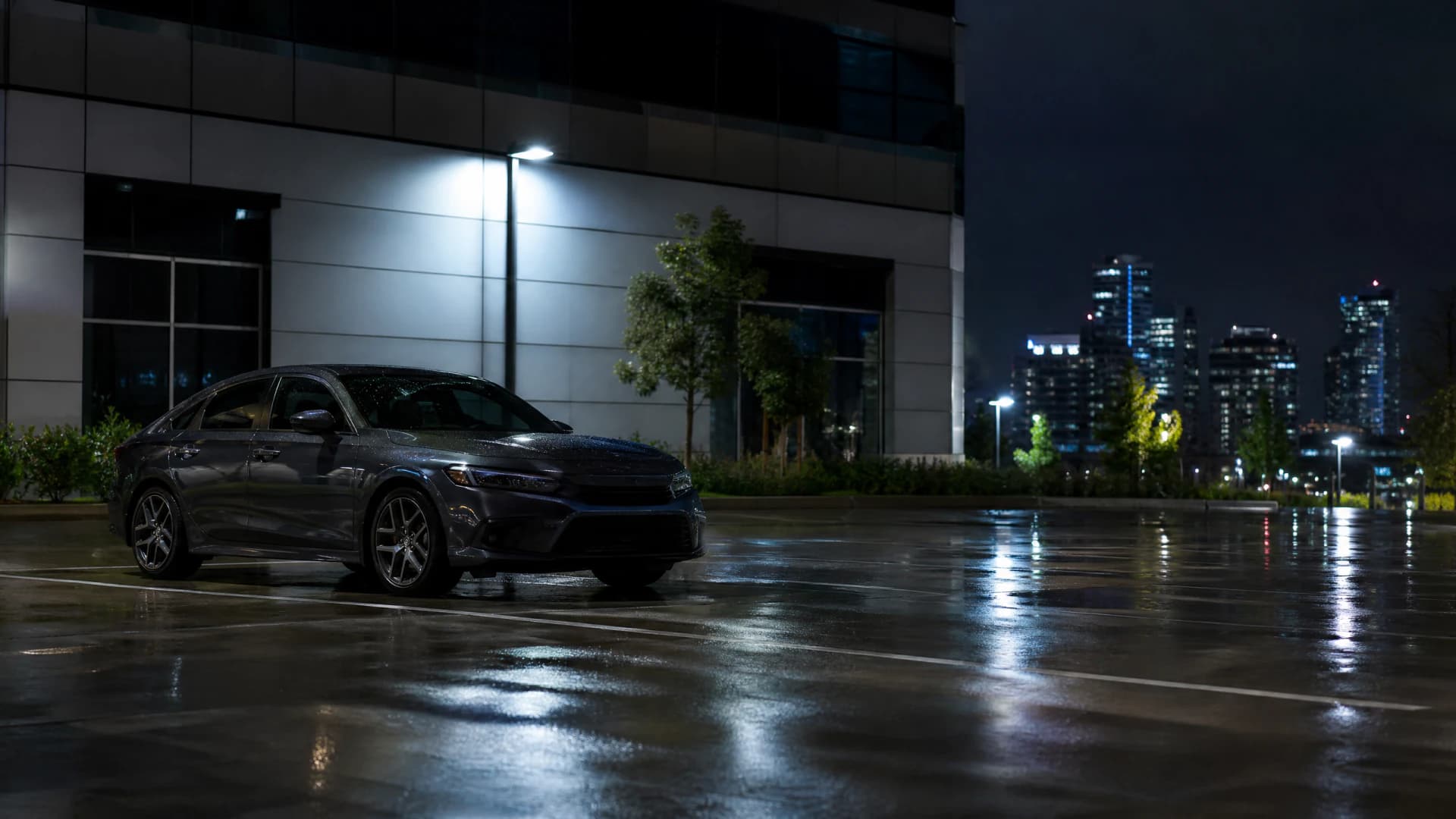
Progressive's multi-car discount requires every vehicle on one policy number. A car titled to someone who cannot be rated onto that policy does not count toward the discount.
Related Articles

Vermont Minimum Liability and How It Affects Multi-Car Quotes
Vermont requires minimum liability coverage of $25,000 per person for bodily injury, $50,000 per accident for bodily injury, and $10,000 for property damage. The state also mandates personal injury protection and uninsured motorist coverage. Every vehicle on your multi-car policy must carry at least these minimums.
When you add a second or third vehicle to an existing Progressive policy, the new vehicle is rated at the same coverage levels as the vehicles already on the policy unless you specify otherwise. Mixing coverage levels across vehicles on the same policy is possible but requires explicit instruction at quote time.
Adding a vehicle mid-term re-rates the entire policy. Progressive recalculates the premium for every vehicle based on the new household risk profile, applies the multi-car discount to the new vehicle count, and prorates the change to your renewal date. The cost of adding a vehicle is not simply the standalone cost of insuring that vehicle; it is the difference between your current total premium and your new total premium after re-rating.
$25,000 / $50,000 / $10,000
Vermont Minimum Liability Limits
Vermont mandates $25,000 per person bodily injury, $50,000 per accident bodily injury, and $10,000 property damage as minimum liability coverage. PIP and uninsured motorist coverage are also required.
Vermont Department of Motor Vehicles
When Another Carrier Beats Progressive for Multi-Car Households
Progressive's standard-tier placement means it competes primarily with Geico, Nationwide, Farmers, and National General in Vermont. If your household qualifies for preferred-tier carriers — State Farm, USAA, Amica — those carriers' base rates may be low enough that even a smaller multi-car discount produces a lower total premium than Progressive's standard-tier base rate plus its multi-car discount.
USAA restricts eligibility to military members, veterans, and their families. If you qualify, request a USAA multi-car quote before committing to Progressive. USAA holds an AM Best A++ rating, writes SR-22 and non-owner policies in Vermont, and consistently delivers lower premiums for preferred-risk households. State Farm, also A+ rated and preferred-tier, writes SR-22 in Vermont and offers online quoting; it is the second preferred-tier comparison point.
If your household includes a high-risk driver — recent DUI, suspended license, or multiple at-fault accidents — Progressive's after-DUI acceptance and SR-22 capability keep it in the comparison set. Dairyland and The General, both non-standard carriers writing in Vermont, may quote lower for high-risk multi-car households, but their non-standard tier reflects higher base rates for most drivers. Compare all three if your household has a high-risk member.
Structuring Your Vermont Multi-Car Policy
Decide whether every vehicle in your household belongs on one policy or whether splitting vehicles across two policies makes sense. The multi-car discount requires one policy. If one household member's driving record or vehicle type produces a rate increase large enough to offset the multi-car discount, that vehicle may cost less on a separate policy.
Run the comparison: quote all vehicles on one Progressive policy, then quote the high-risk vehicle separately and the remaining vehicles together. Compare the two totals. If the combined total of the two-policy structure is lower, the multi-car discount does not justify forcing every vehicle onto one policy. This calculation applies to any carrier, not only Progressive.
Vermont does not restrict the number of vehicles you can insure on one policy. Progressive writes policies covering four, five, or more vehicles. The multi-car discount applies regardless of vehicle count, but the household rating complexity increases with each additional vehicle and driver. Verify that every driver in your household is correctly listed and rated on the policy; an unlisted driver discovered at claim time can result in denial.
Next Step for Vermont Multi-Car Households
Request binding multi-car quotes from Progressive, one preferred-tier carrier if you qualify, and one competitor in your tier. Provide identical vehicle, driver, coverage, and deductible information to each. Compare the total six-month or annual premium for all vehicles combined. The lowest total wins, regardless of how each carrier markets its discount. If Progressive delivers the lowest total for your household, bind the policy. If another carrier beats it, bind there. The multi-car discount is a mechanism; the total premium is the outcome that matters.
How to Compare Progressive Against Vermont's 14 Other Carriers
Request multi-car quotes from at least three carriers writing in Vermont. Include Progressive, one preferred-tier carrier such as State Farm or USAA if you qualify, and one standard-tier competitor such as Geico or Nationwide. Each quote must cover the same vehicles, the same drivers, the same coverage limits, and the same deductibles. The only variable is the carrier.
Compare the total six-month or annual premium for all vehicles combined, not the per-vehicle breakdown. The multi-car discount is embedded in the total; carriers do not itemize it separately on the quote. A household with two cars paying a combined total of one amount at Carrier A and a different combined total at Carrier B has its answer in those two totals, regardless of how each carrier labels or markets its discount.
Get Your Free Quote
Get My Vermont Car Insurance QuoteFrequently Asked Questions
Does Progressive offer a multi-car discount in Vermont?
Yes. Progressive applies a multi-car discount when you insure two or more vehicles on the same policy number in Vermont. The discount does not apply across separate policies, even if both are with Progressive.
How many carriers write multi-car insurance in Vermont?
Fifteen carriers write auto insurance in Vermont, including Progressive, Geico, State Farm, Allstate, USAA, Nationwide, and nine others. All write multi-vehicle policies; compare at least three for your household.
Can I insure three cars on one Progressive policy in Vermont?
Yes. Progressive writes policies covering three or more vehicles in Vermont. The multi-car discount applies regardless of vehicle count, and every vehicle must sit on the same policy number to qualify.
What are Vermont's minimum liability limits for multi-car policies?
Vermont requires $25,000 per person bodily injury, $50,000 per accident bodily injury, and $10,000 property damage. PIP and uninsured motorist coverage are also mandatory. Every vehicle on your policy must carry at least these minimums.
Does adding a second car to my Progressive policy change my rate?
Yes. Adding a vehicle mid-term re-rates the entire policy. Progressive recalculates the premium for every vehicle based on the new household risk profile, applies the multi-car discount, and prorates the change to your renewal date.
Should I put all my cars on one Progressive policy or split them?
Compare both structures. Quote all vehicles on one policy, then quote high-risk vehicles separately and remaining vehicles together. If the two-policy total is lower, the multi-car discount does not justify one shared policy.